There are two parts of nervous system:
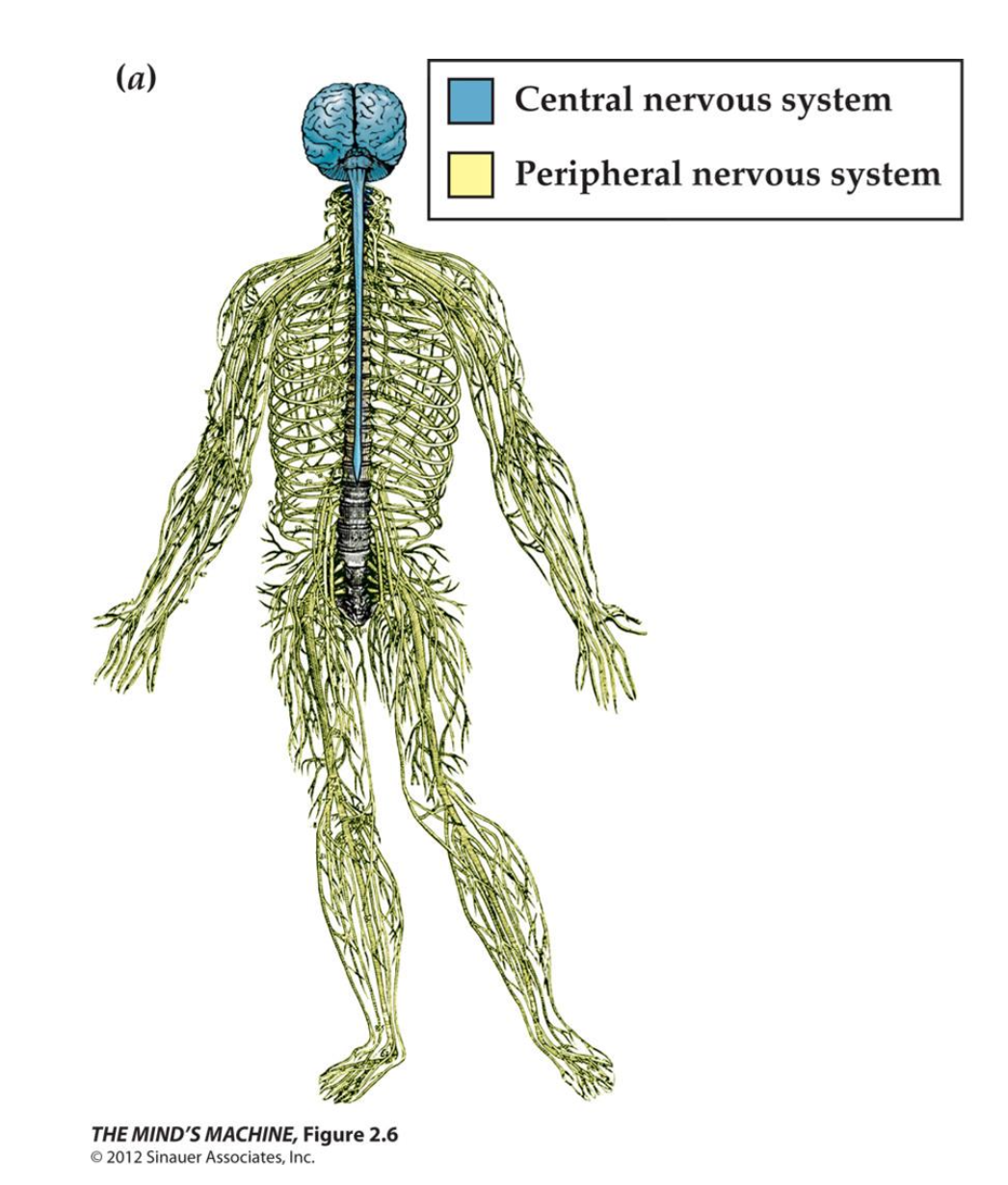
Central nervous system (CNS)
Including:
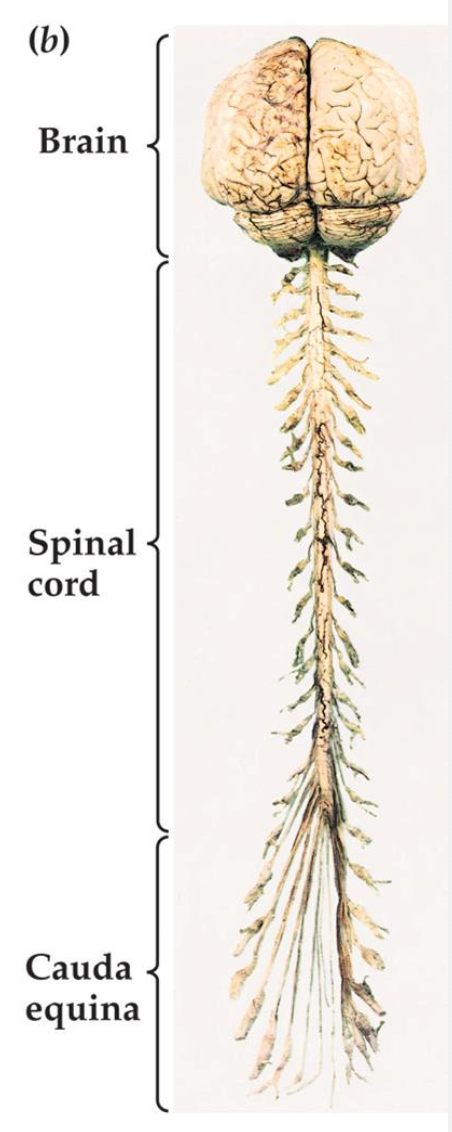
CNS is protected by the meninges and floats in the CSF .
Meninges and cerebrospinal fluid protect the CNS against physical damage.
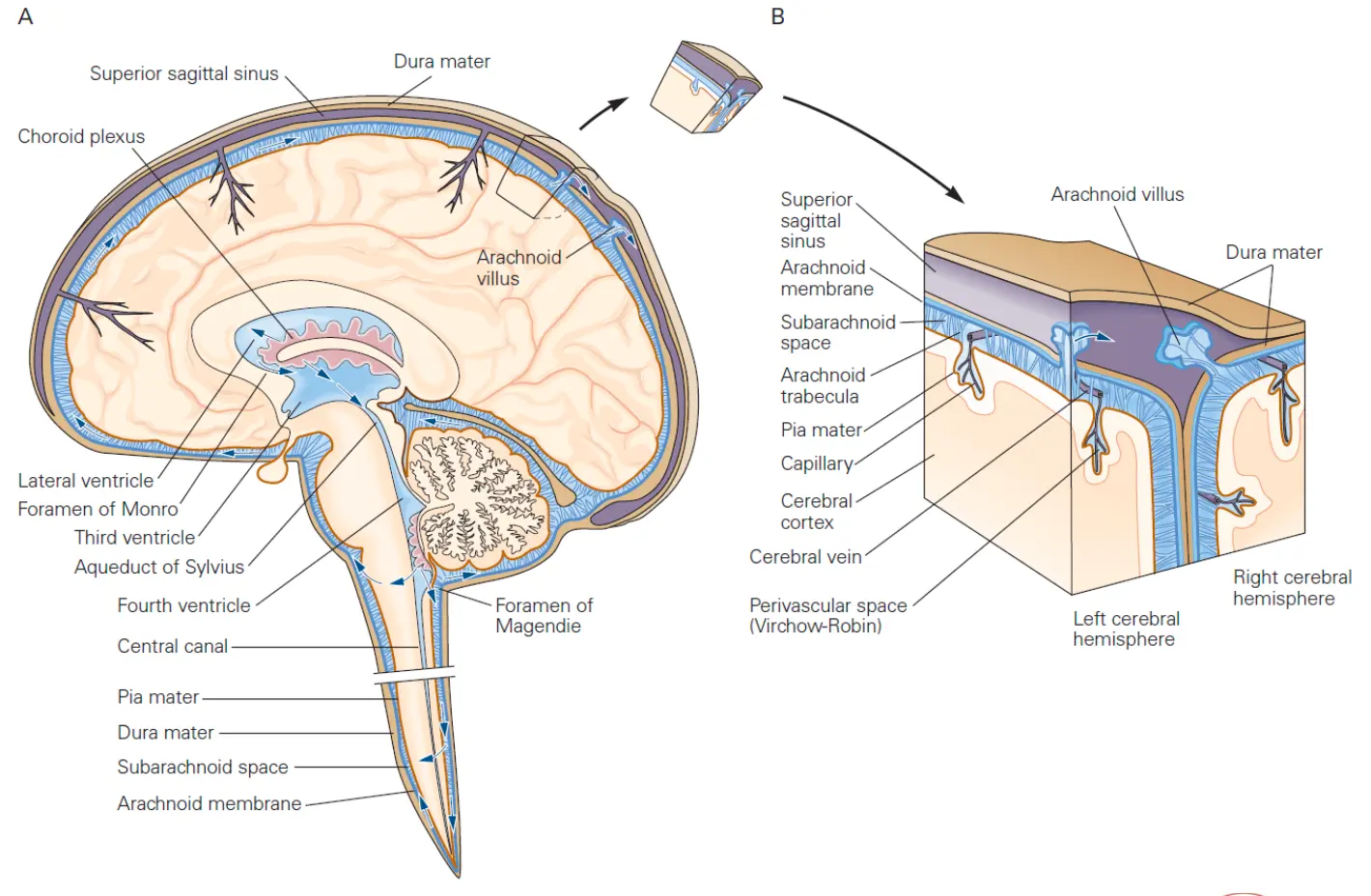
Meninges
3 protective membranes
- Dura mater: thickest & most outer
- Arachnoid mater: middle layer
- Pia mater: inner & most delicate
- Firmly adheres to the brain surface
Cerebrospinal Fluid
Cerebrospinal Fluid allows:
- The brain to float to help offset the pressure that would be present if the brain were merely sitting on the base of the skull
- reduces shock to the brain and spinal cord during rapid accelerations or decelerations, such as when we fall or are struck on the head
Blood-brain barrier
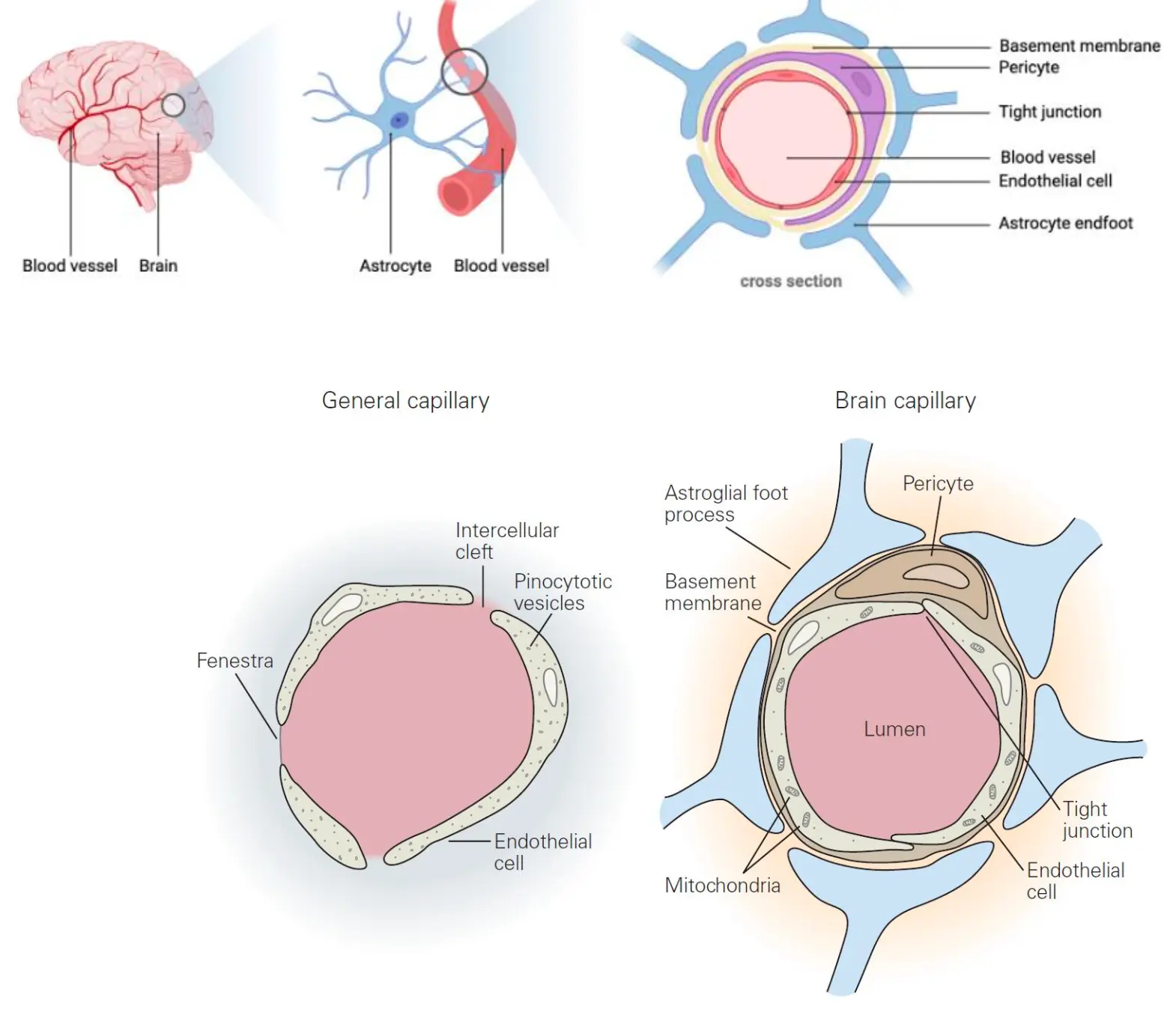
- It is made up of a collection of cells with unique properties.
- Barrier between the brain’s blood vessels (capillaries) and the cells and other components that make up brain tissue.
- Protect the CNS against disease-causing pathogens and toxins that may be present in our blood.
Peripheral nervous system (PNS)
Includes:
-
Nerves: bundles of Axons and glia
-
Ganglia: clumps of nerve cell bodies outside of the CNS
-
delivers sensory information to the CNS
-
carries the motor commands from the CNS to the muscles
-
supplies the CNS with a continuous stream of information about both the external environment and the internal environment of the body
-
has somatic and autonomic divisions
Somatic nervous system
- sensory neurons that receive information from the skin, muscles, and joints.
- Receptors associated with these cells provide information about muscle and limb position and about touch and pressure at the body surface.
- Receptors transduce different types of physical energy (such as deep pressure or heat) into the electrical signals used by the nervous system.
Autonomic nervous system
- mediates visceral sensation as well as motor control of the viscera, vascular system, and exocrine glands.
Includes:
- #Sympathetic system : participates in the body’s response to stress
- #Parasympathetic system : acts to conserve body resources and restore homeostasis
- Enteric (nervous) system: controls the function of smooth muscle of the gut
The sympathetic system and parasympathetic system operate antagonistically.
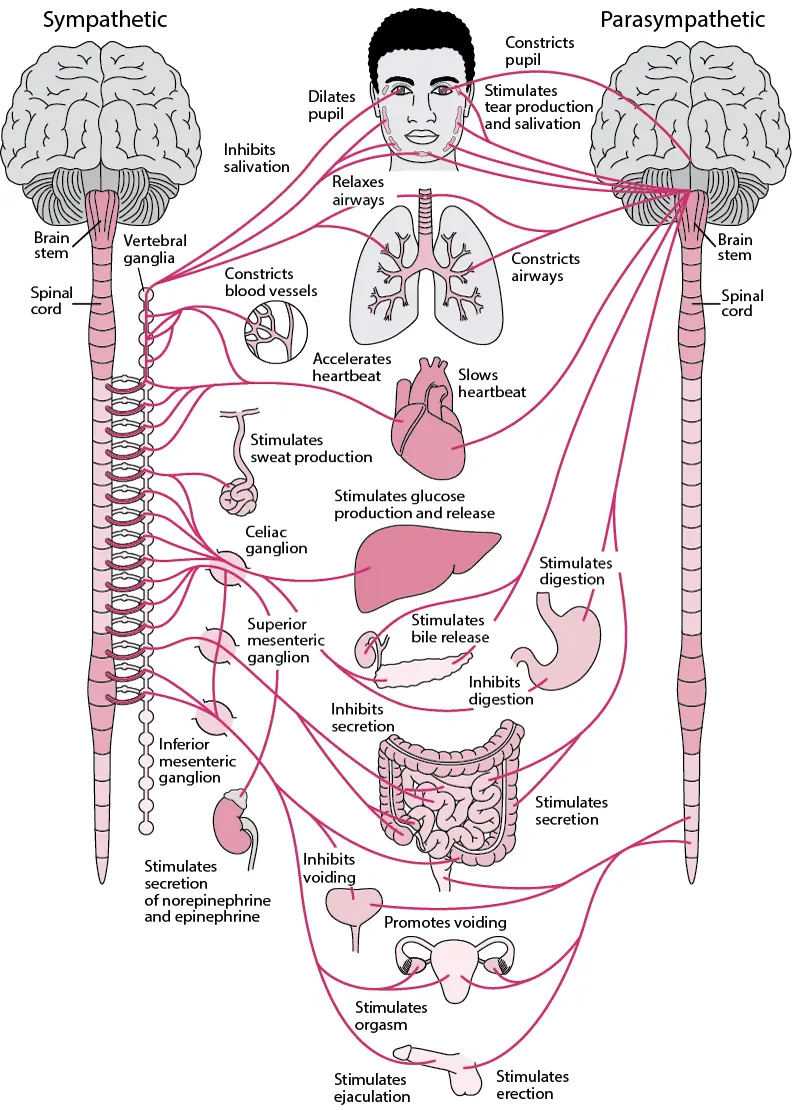
Sympathetic system
- sympathetic system uses norepinephrine
Example:
- prepares the body for action (fight or flight) by stimulating the adrenal glands to release adrenaline
- increases heart rate
- diverts blood from the digestive tract to the somatic musculature
Parasympathetic system
- parasympathetic system uses acetylcholine
Example:
- helps the body with functions germane to maintaining the body
- Slows heart rate
- stimulates digestion