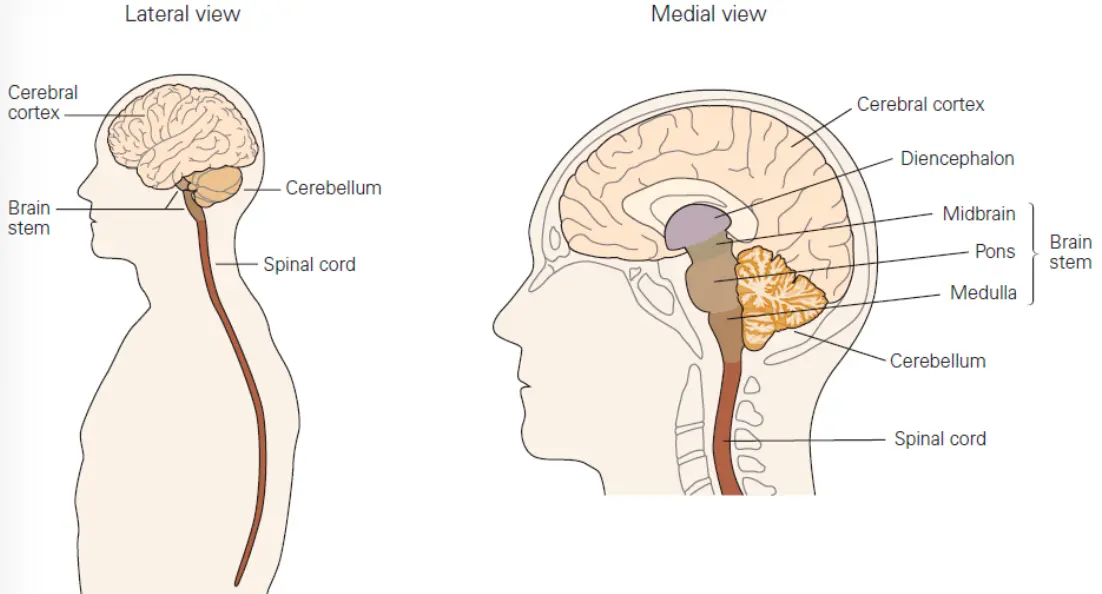
The brain is composed of 6 subdivisions
- Medulla
- Pons
- Midbrain
- Cerebellum
- Diencephalon: thalamus & hypothalamus
- Telencephalon: cerebral hemispheres
- It is mostly symmetrical along the midline:
- each subdivision is found in both hemispheres of the brain with slight bilateral differences
Brain stem
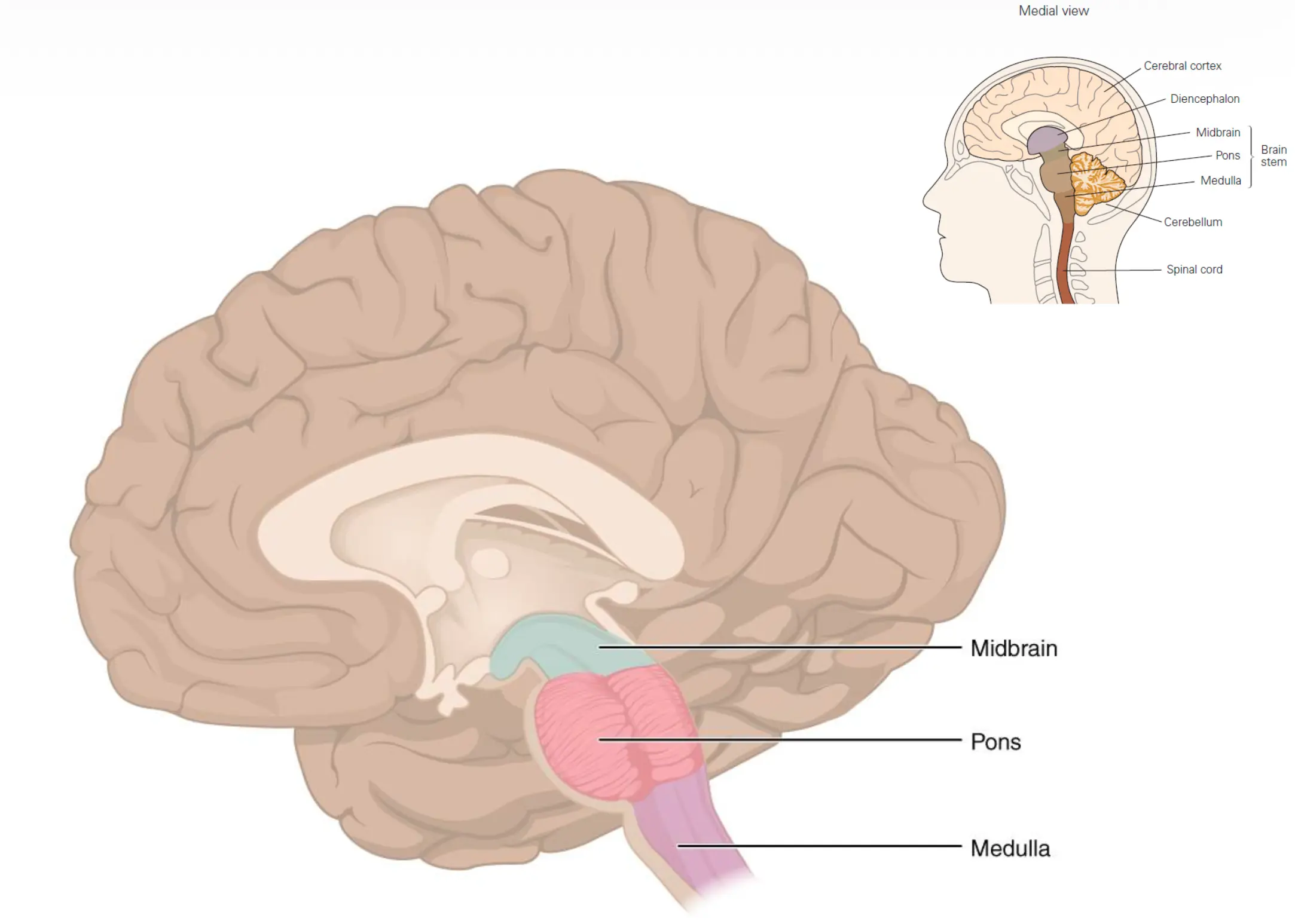
Includes
- Medulla
- Pons
- Midbrain
Regulates basic life functions:
- blood pressure
- Respiration
- Sleep/wakefulness
Damage to the brainstem is life threatening.
Cerebellum
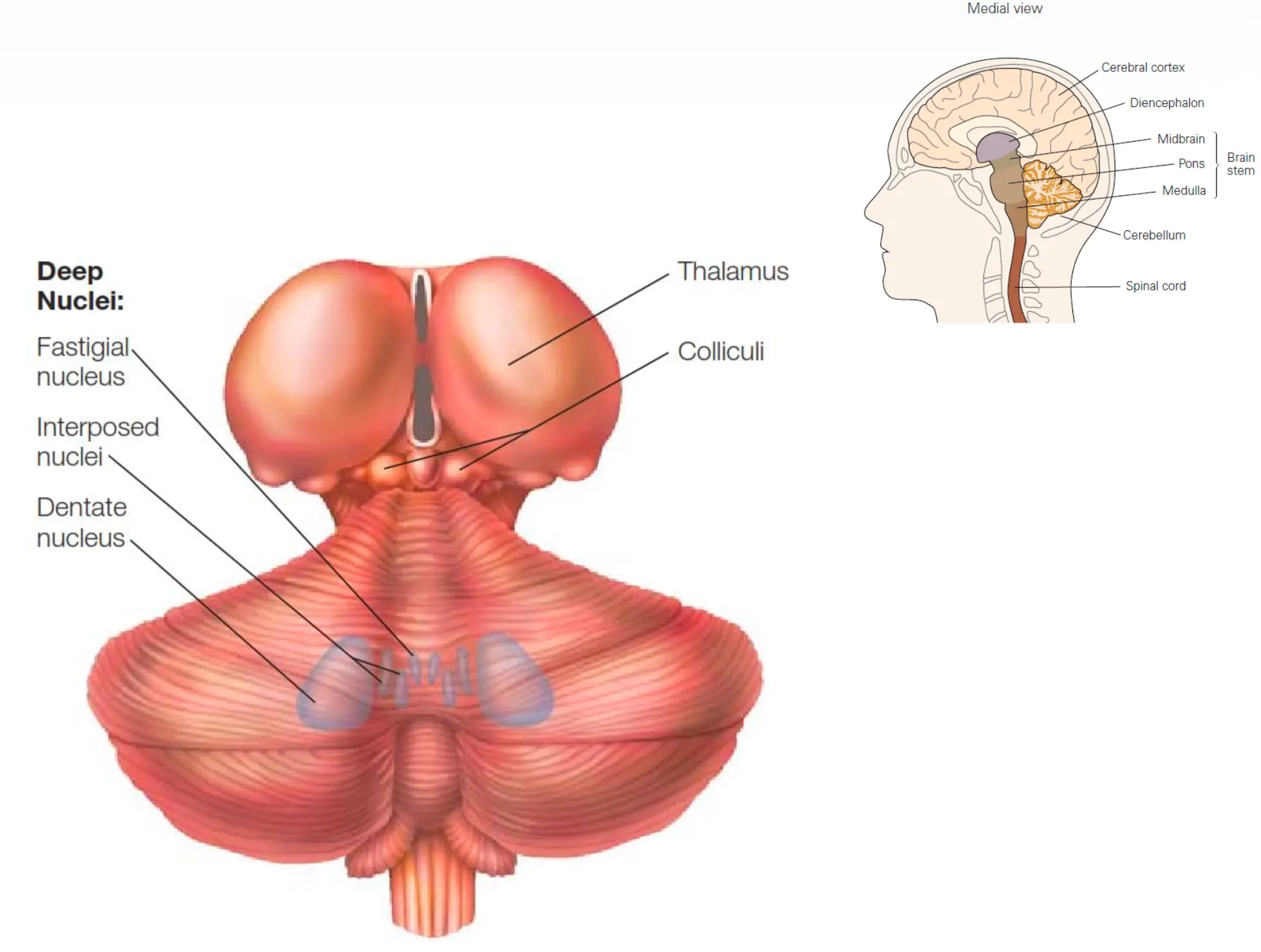
Important for:
- maintaining posture
- coordinating head, eye, and arm movements
- regulation of motor output
- learning motor skills
Diencephalon
Thalamus
- “gateway to the cortex”
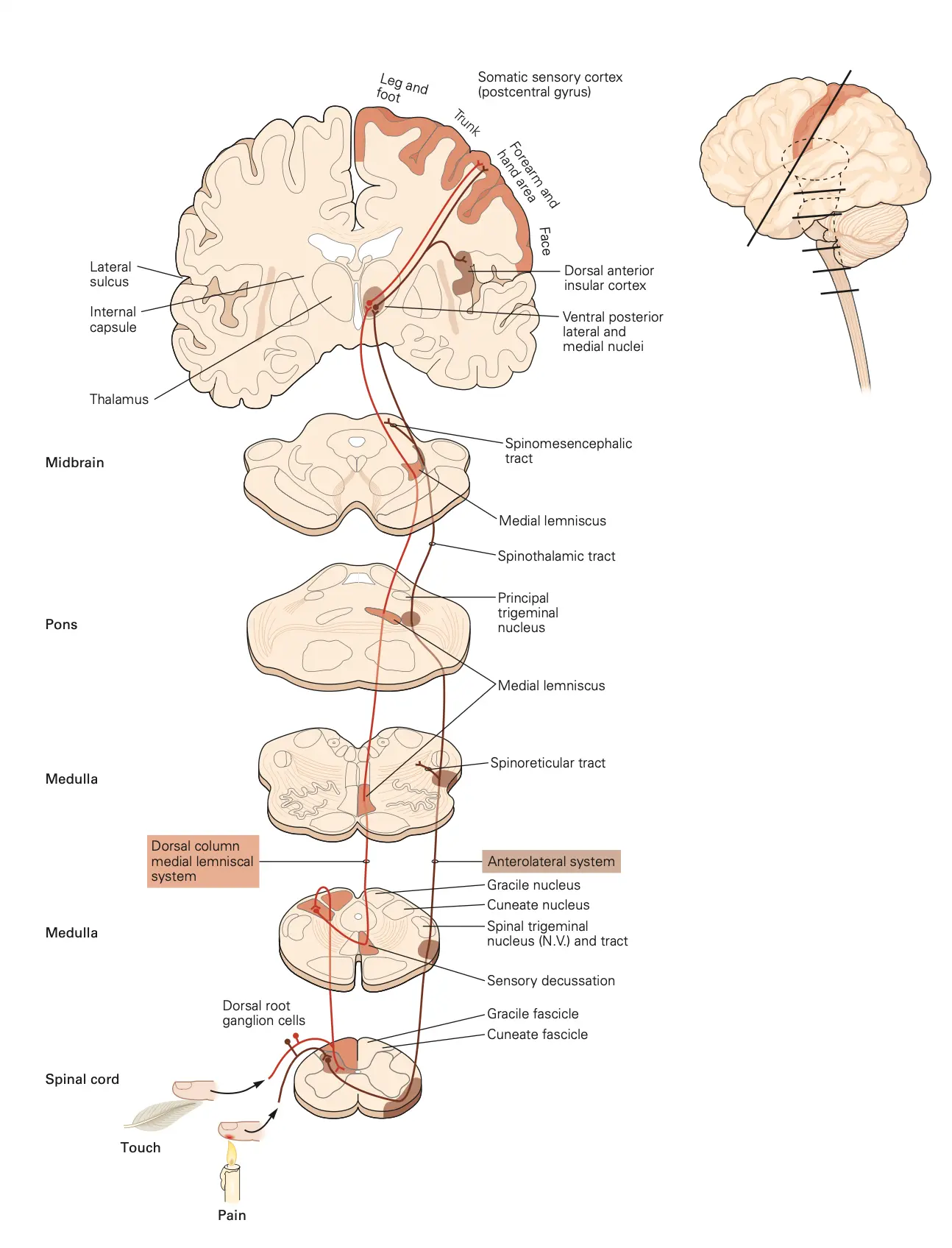
- essential link in the pathway of sensory information from the periphery to sensory regions of the cerebral hemispheres
- All sensory information, except for the sense of smell, passes through the thalamus before processing by the cortex
Hypothalamus
- Regulates homeostasis
- Regulates response of the autonomic nervous system and the endocrine system through its regulation of the pituitary gland.
- essential component of the motivational systems of the brain, initiating and maintaining behaviors the organism finds aversive or rewarding
Telencephalon
Cerebral hemispheres
- The largest part of the human brain
Consists of: - the cerebral cortex made of grey matter (i.e. neuronal cell bodies)
- the underlying white matter (i.e. axons and glial cells)
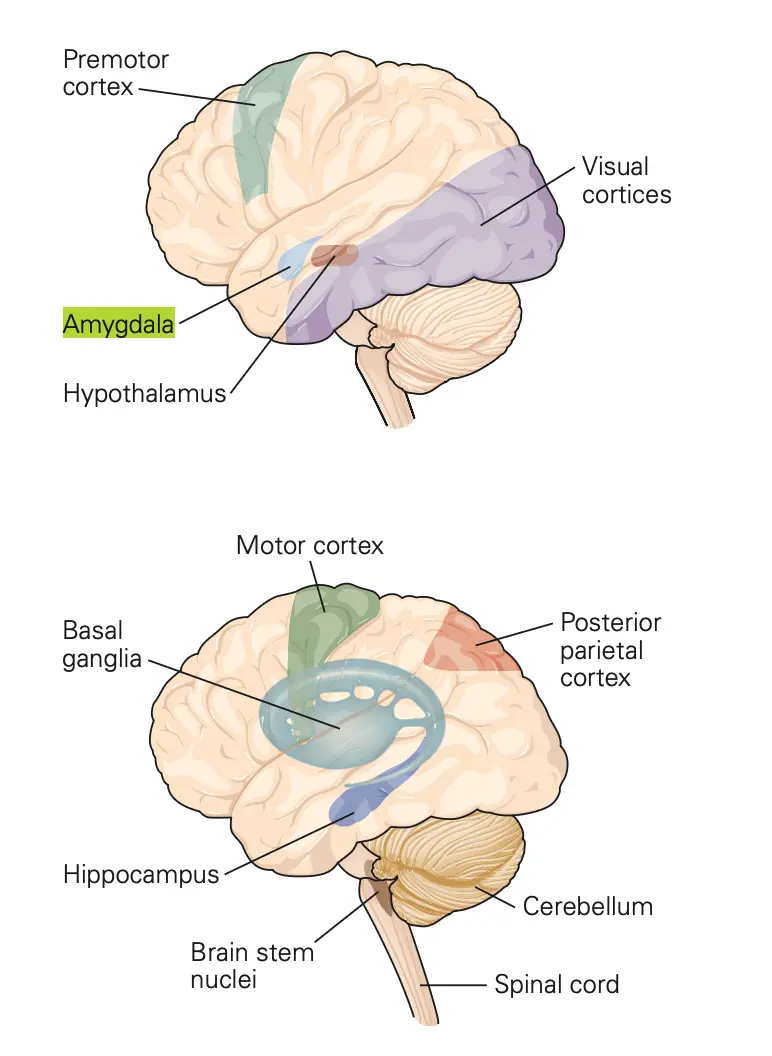
- three deep-lying structures that regulate cortical activity:
- Basal ganglia
- Amygdala
- Hippocampus
Cerebral cortex
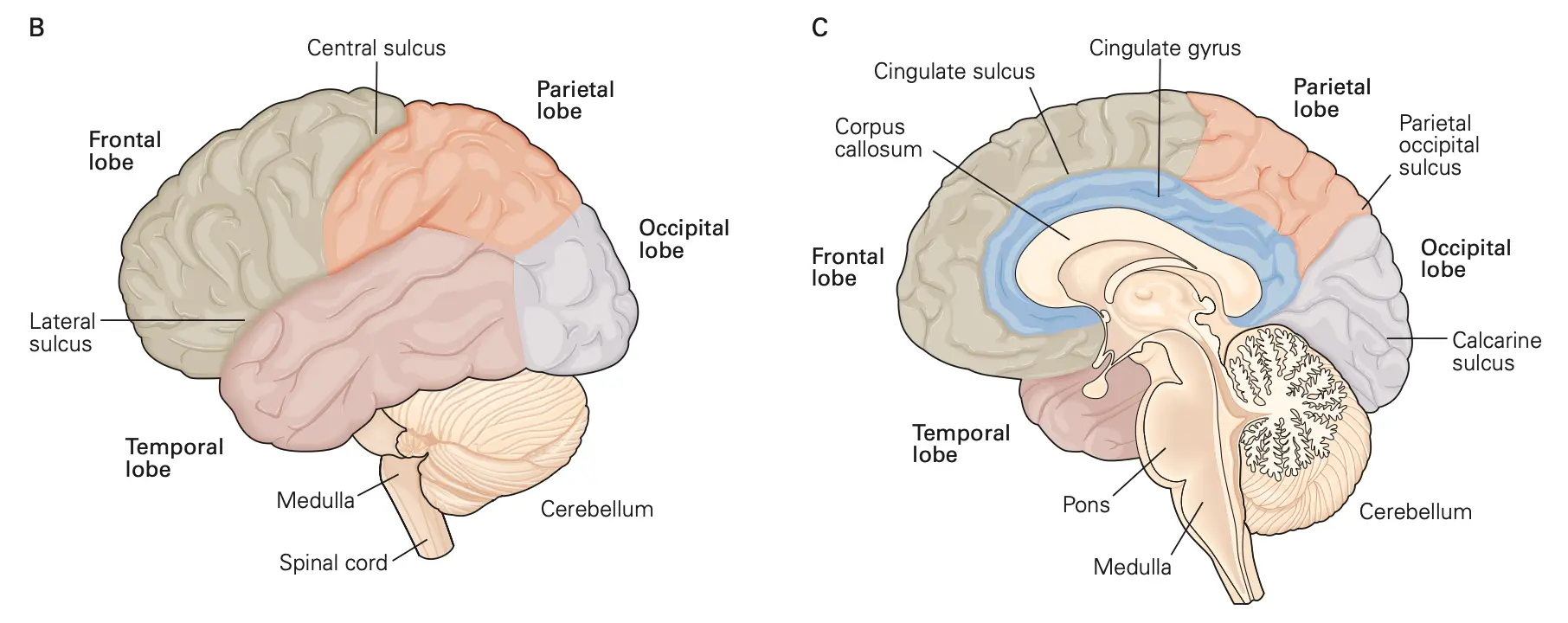
- Two symmetrical hemispheres connected through the corpus callosum
- Divided in 4 lobes distinguished from one another by pronounced sulci
- The lobes of the cerebral cortex have a variety of functional roles in neural processing
- Cognitive brain systems are often composed of networks whose component parts are located in different lobes of the cortex
- Each functional system is hierarchically organized:
- areas of the cerebral cortex are designated as primary, secondary, or tertiary areas, depending on their functional sequence within the pathway
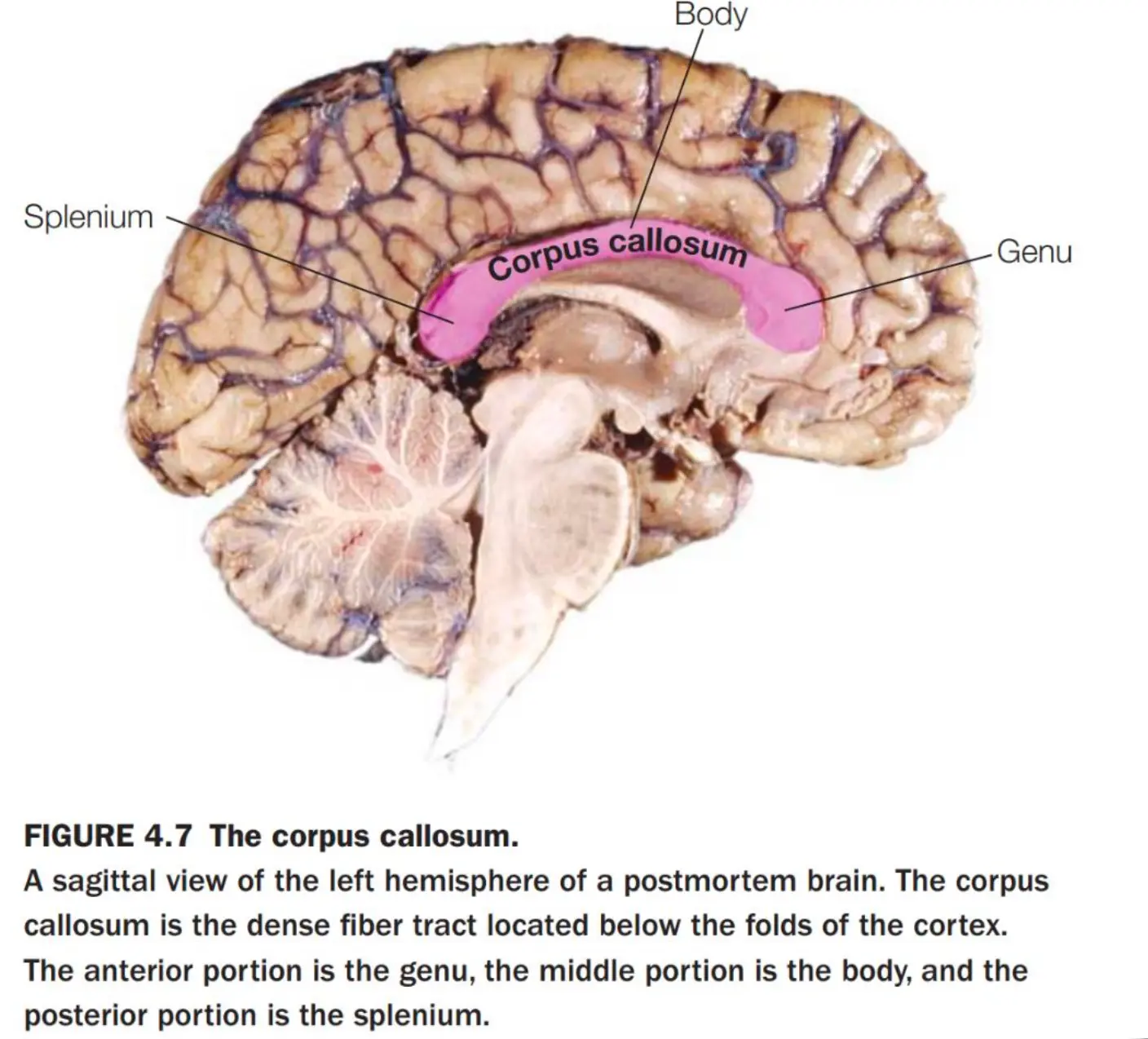
Corpus Callosum
The left and right cerebral hemispheres are connected by the largest white matter structure in the brain, the corpus callosum, the primary communication highway between the two cerebral hemispheres.
Hemispheric Specialization
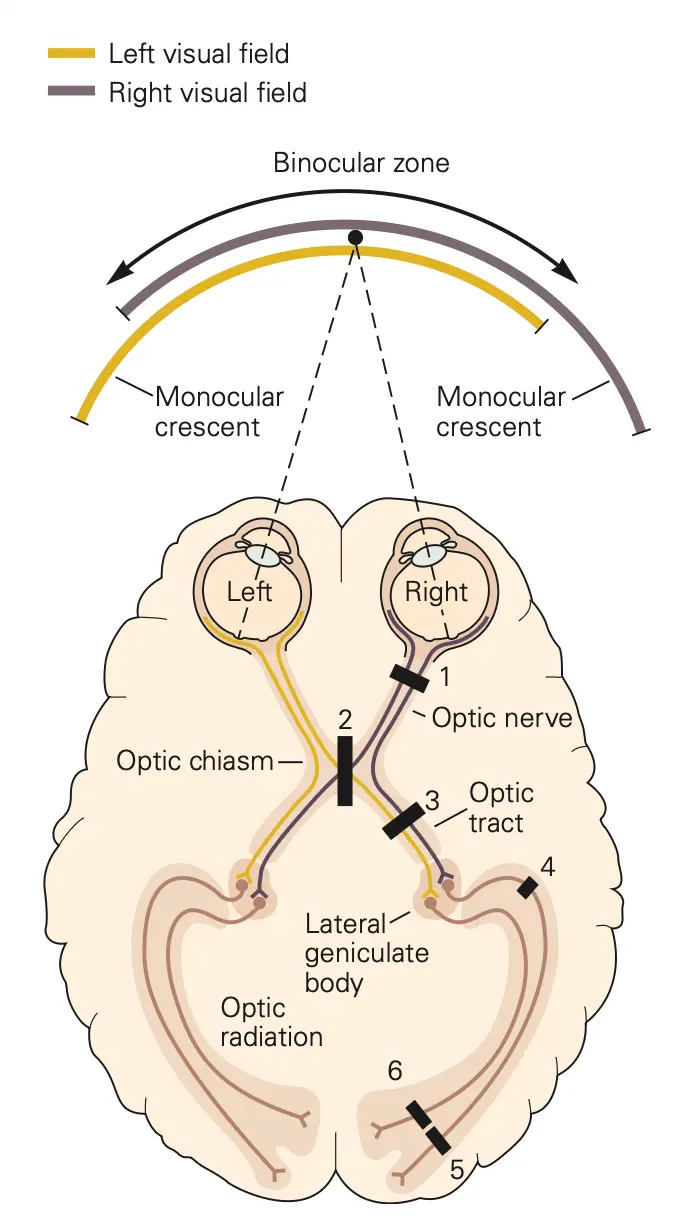
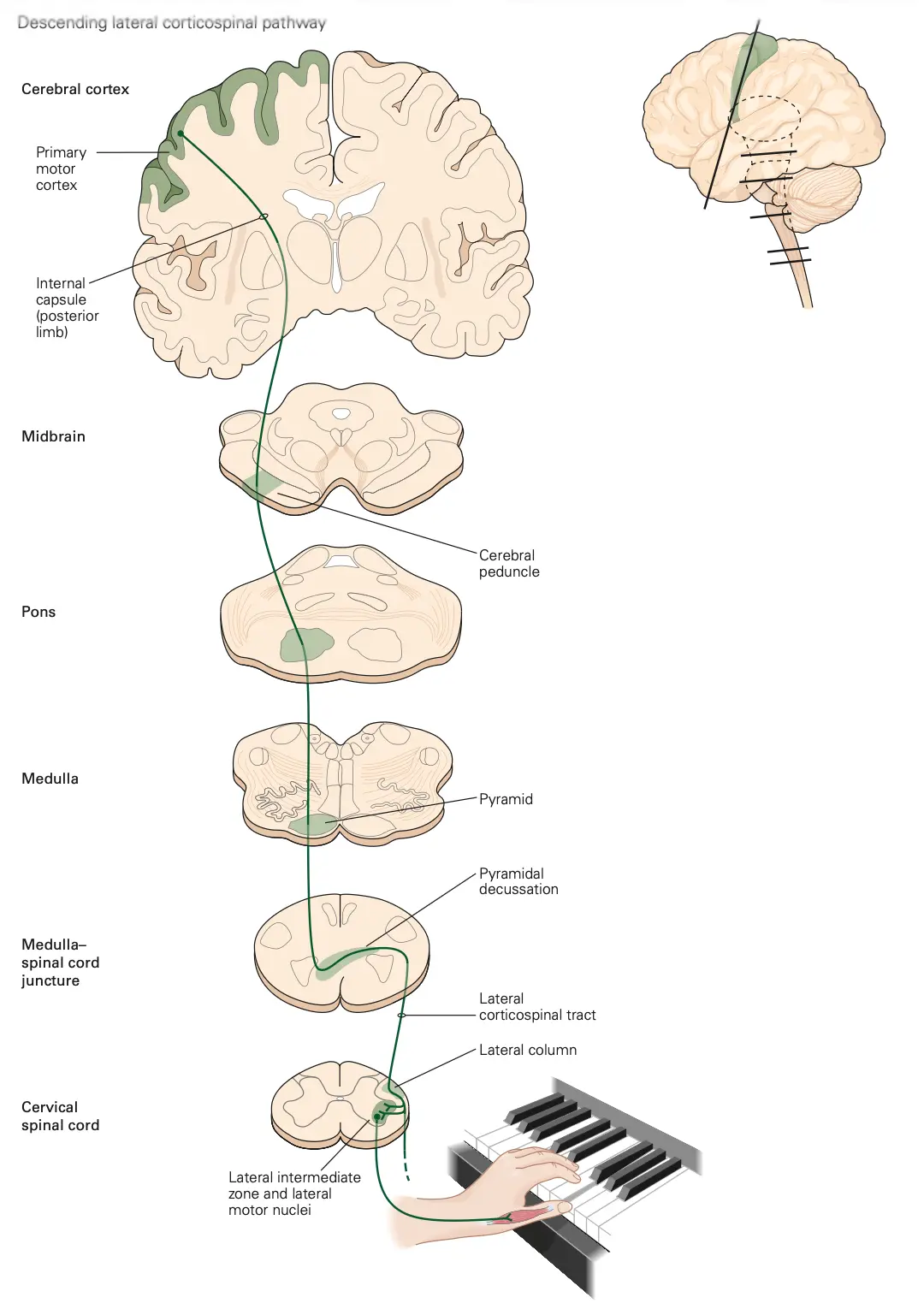
- Sensory and motor activities on one side of the body are mediated by the cerebral hemisphere on the opposite side
- Most pathways in the central nervous system are bilaterally symmetrical and cross over to the opposite (contralateral) side of the brain or spinal cord
Examples:
- Visual Pathway
- Motor pathway
- Somatosensory pathway
Reference
- 3D brain: https://www.brainfacts.org/3d-brain